


Sensory Play Ideas for Toddlers and Preschoolers: How Little Hands Make Big Discoveries

There is something so fun about watching a little kid get completely absorbed in what they’re doing.
Maybe they’re squeezing play dough, pouring water from one cup to another, digging through sand, or examining what happens when they hold something colorful up to the light.
To us, it might just look like play. But there is actually a lot happening behind the scenes.
Sensory play gives young children a chance to explore through touch, sight, sound, movement, and sometimes smell. Along the way, they’re experimenting, building fine motor skills, learning new words, making connections, and figuring out how things work.
And the best part? Sensory play doesn’t have to mean an elaborate Pinterest-worthy setup. We pulled together a few easy sensory play ideas for toddlers and preschoolers, with insight from The Gardner School on what kids are learning as they pour, squish, sort, paint, and explore.

Water Play = Early Science
Give a child some water, a few cups, and something to pour with and you may have just bought yourself 20 minutes.
But while they’re pouring, filling, emptying and splashing, they’re also beginning to explore concepts like volume, cause and effect, measurement and movement.
You can build language into the activity, too:
“You’re pouring the water. Pour, pour, pour!”
“The cup is full.”
“Now it’s empty!”
“This one has more water.”
Simple repetition helps children connect the words they hear with what they’re actually doing.
You can also wonder out loud about what might happen next: “I wonder what happens when we pour the water through here.”
No formal lesson required. They’re learning simply by experimenting.

Build a Sensory Bin
Sensory bins can be as simple or elaborate as you want them to be, and you probably already have plenty of things around the house to get started.
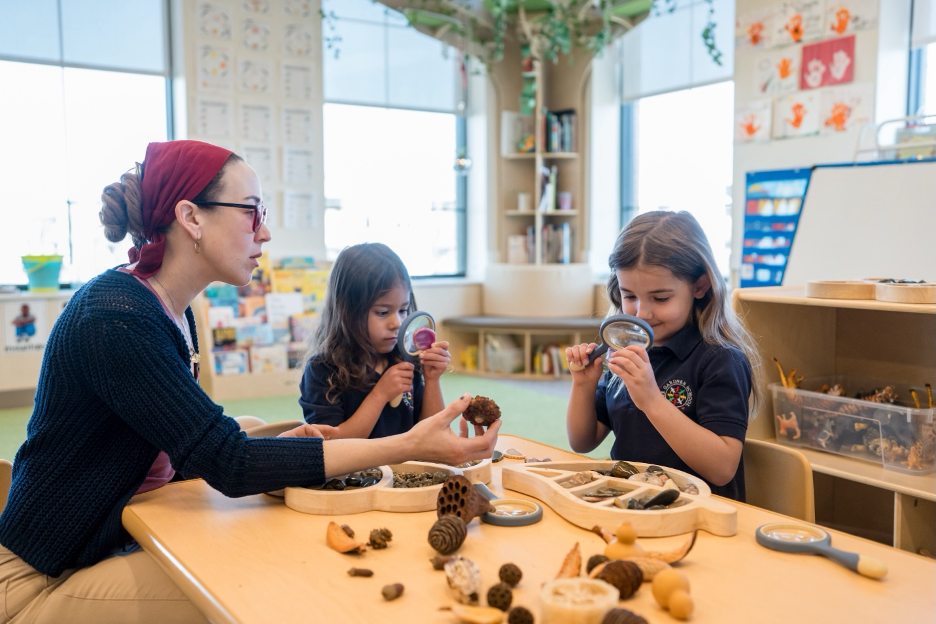
Try using food coloring to dye dry rice different colors, add kinetic sand with cups and scoops, or fill a bin with dry pasta and small containers for pouring and transferring. You can even bring the outdoors in: collect leaves on a walk and let kids crunch, tear, sort, and explore the different textures.
A few more easy ideas: cotton balls, pom-poms, water with sponges, ice cubes, shredded paper, or seasonal items like mini pumpkins and pinecones. Add measuring cups, muffin tins, tongs, funnels, or spoons and let them take it from there.
A quick safety note: dry rice, pasta, pom-poms and other small pieces can be choking hazards for little ones who still put everything in their mouths. Pick bigger items for younger toddlers, stay close while they play, and always supervise water play, including in the bathtub.
You can also build a bin around whatever your child is currently obsessed with. Add toy trucks to kinetic sand, plastic animals to a nature bin, or letters and numbers to dyed rice.
One easy way to add another layer of learning is simply talking about what your child is experiencing:
“That leaf is crunchy.”
“The sand feels soft.”
“You filled the cup all the way up.”
“That one is heavier.”
Words like smooth, rough, heavy, light, full, empty, soft, firm, sticky, crunchy, and squishy are much easier to understand when kids can actually experience what they mean.
At The Gardner School, this kind of hands-on exploration is incorporated into toddler learning through sensory awareness, observation, play and self-expression.

Paint Without the Paintbrush
Put the paintbrush down. Or at least add a few other things next to it.
Sponges, rollers, fingers and textured materials all give kids different ways to explore paint.
As they experiment, they begin noticing patterns and differences while also strengthening the small hand movements that eventually support skills like drawing and writing.
Try talking about what you see rather than asking your child to identify everything:
“You made a big blue line.”
“Look at all those dots!”
“The sponge made a different shape.”
And this is your reminder that it does not need to turn into something worthy of hanging on the fridge. With sensory art, the process is the activity.

Play With Light and Color
You don’t need a light table to let kids experiment with light and color. Grab a flashlight and make shadow puppets on the wall, trace shadows with chalk outside, hold colorful or translucent objects up to a sunny window, or shine a light through different toys and objects to see what happens.
You can also layer colorful transparent materials to see how the colors change, or take a flashlight into a dark room and let kids experiment with moving the light closer and farther away.
Talk about what they notice as they play:
“Your shadow got bigger!”
“The light goes through this one.”
“Look what happened when we put these two colors together.”
It’s simple, requires almost no setup and gives kids a chance to experiment with color, shadows, shapes and cause and effect.

Bring Out the Play Dough
Rolling, pressing, pinching, flattening, cutting and shaping dough is fun, but it’s also great fine motor practice.
And you can change the activity without buying anything new.
Add alphabet shapes when you’re working on letters, child-safe tools for pretend construction, cookie cutters, or leaves and other natural objects during seasonal play.
One familiar material can suddenly become a literacy activity, imaginative play, science exploration or early math.
It’s also an easy place to build language naturally:
“Roll, roll, roll.”
“Squish!”
“You made a big ball.”
“Let’s make it flat.”
It doesn’t need to feel like a lesson to be one.
Sensory Play Is Also a Chance to Build Language
While your child is pouring, squishing, sorting and building, they’re not only exploring with their senses.
These everyday moments are also great opportunities to build language.
We previously asked Meredith Harrison, M.S., CCC-SLP, a speech-language pathologist, to share some of her favorite ways to encourage language development during everyday play.
One of our biggest takeaways: you don’t need to quiz your child. Instead, talk about what they’re already doing.
If your child is scooping rice, you might say:
“Scoop, scoop, scoop. Now the bowl is full!”
If they’re playing with dough:
“Squish! That dough is so soft.”
And if your child says, “Ball,” you can build on it with, “Big ball!” or “Roll the ball!”
Think narrating instead of testing.
Rather than repeatedly asking, “What color is this?” you can simply say, “You found the red one!” It keeps the interaction playful while introducing new words naturally.
Repetition and expanding on the words children already use are also simple ways to encourage language development during everyday play.
For more ideas, read our guide with a speech-language pathologist: 4 Simple and Effective Ways to Boost Your Toddler’s Language Development.

Easy Sensory Play Ideas to Try at Home
Good news: sensory play does not require an elaborate setup or a cart full of supplies.
Some of the easiest activities are probably already sitting around your house:
Water and cups in the bathtub
Play dough at the kitchen table
Leaves collected on a neighborhood walk
A bowl of child-safe objects to sort by size, color or texture
Paint and something other than a paintbrush
A flashlight and objects that make interesting shadows
For little kids, you don’t necessarily need to create more. Sometimes you just need to give them the space and time to explore what’s already around them.
At The Gardner School, those everyday moments of discovery are woven into classroom learning, giving children opportunities to explore, create, collaborate and follow their curiosity.
Because sometimes the simplest play leads to the biggest discoveries.
Touring preschools this year? Our guide on how to choose a daycare or preschool in Chicago walks through the questions every mom should ask.
Want more simple ideas from moms who have been there?
Join the Friend of a Mom community for events, resources and moms who already figured it out.


Comments